

Athens International Airport (AIA)

The Project

Athens International Airport
Eleftherios Venizelos 
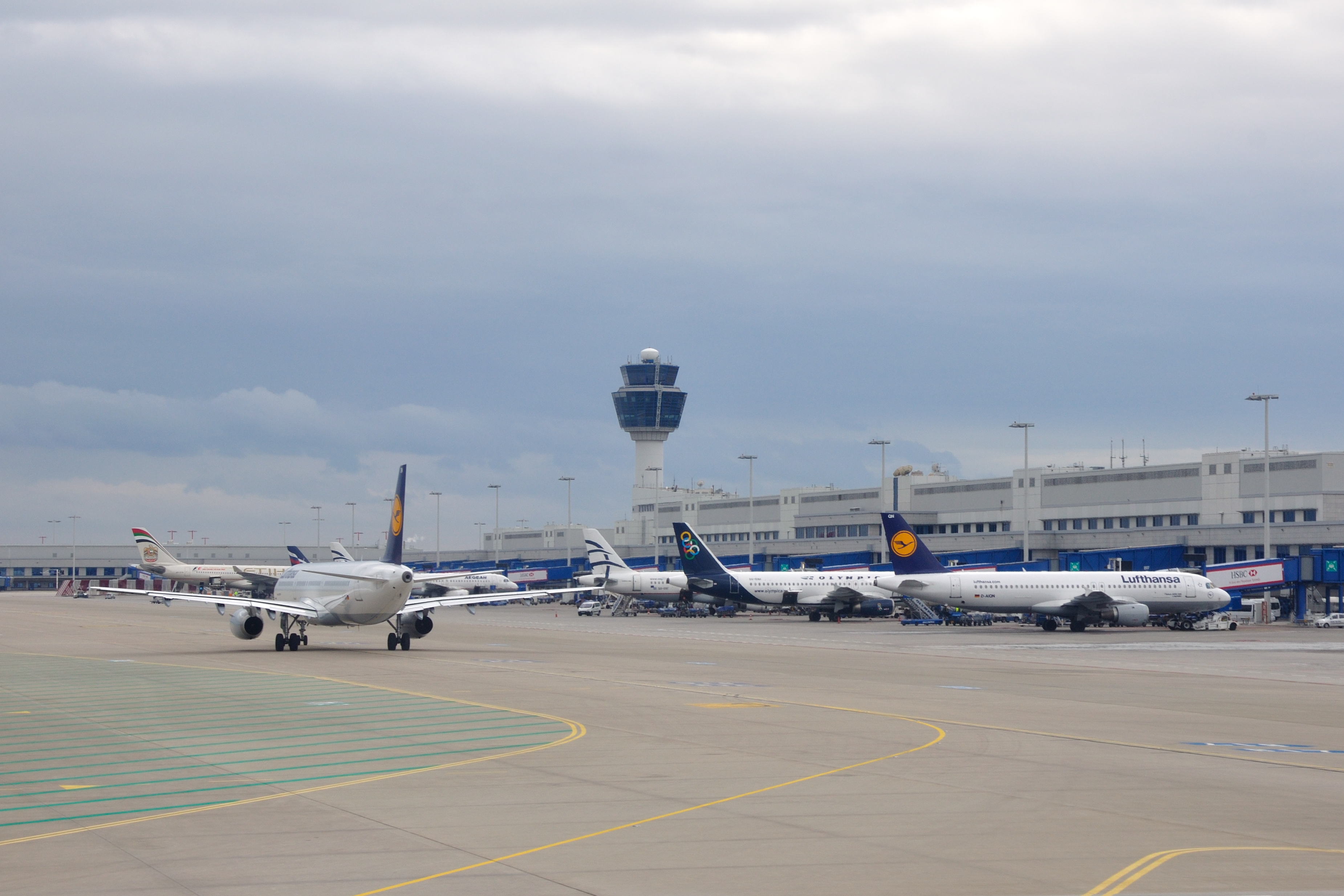
Athens International Airport
Photo by Hansueli Krapf License: [CC BY-SA 3.0], via Wikimedia Commons

Athens International Airport Eleftherios Venizelos (Greek: Διεθνής Αερολιμένας Αθηνών «Ελευθέριος Βενιζέλος»; IATA: ATH, ICAO: LGAV) is the principal international gateway for Greece, located at Spata, 25 kilometers east of Athens in the Attica region. By the early 1990s, the existing Hellenikon airport — a single-runway facility on the Athens coastline — was chronically overcrowded, handling up to 8,000 passengers per hour in summer months through a terminal designed for a fraction of that number. A new airport had been under consideration since the 1950s and repeatedly postponed through successive governments. The challenge was not technical but financial and political: how to deliver a major greenfield airport without burdening the Greek state budget, at a time when Greece was simultaneously absorbing the demands of EU convergence and preparing to host the 2004 Olympic Games.

Project Description

In 1991 the Greek government launched an international competitive tender for a Build-Own-Operate-Transfer partner to develop, finance, and operate a new international airport at Spata. After an extended bidding and renegotiation process — the incoming Papandreou government reopened the competition in 1993, and the Hochtief-led consortium was reconfirmed on 23 December 1994 — the contract was ratified by the Greek Parliament on 31 August 1995 and the concession commenced in June 1996. Athens International Airport S.A. was established as a public-private partnership with a 30-year concession. The Hellenic Republic held a 55% stake and the Hochtief-led private consortium held the remaining 45%. Construction began in July 1996 with a 56-month programme. The airport opened on 28 March 2001, five months ahead of the original schedule.

At a total project cost of DM 4.125 billion — the construction contract alone valued at DM 3.259 billion — Eleftherios Venizelos was at the time of its financial closing the world's first privately financed BOOT airport project, the largest infrastructure project in the modern history of Greece, and the largest cross-border airport financing ever executed within the European Union. It was named Continental European Deal of the Year 1995 by Privatisation International. The airport was designed for an initial capacity of 16 million passengers per year across two independent parallel runways, with phased expandability to 50 million. By 2018 it was handling over 24 million passengers annually and ranked as the 26th-busiest airport in Europe.

Financial Advisory

Project Finance

The financing was a project finance deal on the basis of Build-Own-Operate-Transfer (BOOT), which means that the securities for the loans were not based on the credit-worthiness of the owners, but on the future cashflow of the project. In the framework of a public-private partnership with the Greek State (45% private/55% public ownership), the airport will be operated over the period of 30 years (including construction time) in the legal form of a private company.

Within the Hochtief consortium, ABB led an internal sub-consortium covering ABB Calor Emag Schaltanlagen AG for electrical engineering works and H. Krantz-TKT GmbH for mechanical engineering works. Peter Hellmonds was the sole finance professional responsible for both entities, negotiating the project finance package and the Hermes export credit guarantee coverage on behalf of ABB and Krantz-TKT. The Hermes guarantee covered ABB's and Krantz-TKT's equipment supply — the German exported content of the project — while Hochtief's civil works, executed predominantly by Greek contractors, lay outside Hermes scope.

Assignment Negotiation of the finance package within the framework of a 30-year BOOT project finance
Client ABB (Asea Brown Boveri) within a consortium with Hochtief, Krantz-TKT, and Fraport
Total project value DM 4,118 million (approx. EUR 2,050 million)
Client part of project value DM 890 million (approx. EUR 445 million) — ABB, includes Krantz-TKT part
ECA coverage Hermes (German federal export credit guarantee)
Financial closing 11 June 1996

After engagement on this project, the total time to financial closing of the BOOT project finance deal was approximately 18 months. At the time of financial closing in 1996, the Athens Airport financing ranked among the largest project finance transactions in Europe, exceeded in scale only by the Channel Tunnel.

Key Characteristics

Project Athens International Airport Eleftherios Venizelos — greenfield BOOT airport
Location Spata, Attica, Greece — 25 km east of Athens city center
IATA / ICAO ATH / LGAV
Structure Build-Own-Operate-Transfer (BOOT) / 30-year concession
Ownership 55% Hellenic Republic — 45% private consortium
Private shareholders Hochtief AG 36.125% — ABB Calor Emag Schaltanlagen AG 5% — H. Krantz-TKT GmbH 3.75% — Flughafen Athen-Spata Projektgesellschaft mbH 0.125%
Total project cost DM 4.125 billion
Construction contract DM 3.259 billion
Construction period 56 months (July 1996 – March 2001)
Initial capacity 16 million passengers per year
Runway system 2 independent parallel runways: 4,000 m and 3,800 m
Site area 1,244 hectares
Commencement date June 1996
Opening 28 March 2001
Recognition Continental European Deal of the Year 1995 (Privatisation International); world's first privately financed BOOT airport; first major cross-border airport financing in the EU

Financing Package

The total financing package of DM 4.125 billion was structured as a public-private partnership combining European institutional lending, EU grant funding, Greek government contributions, and private consortium equity. The European Investment Bank provided senior debt covering 50% of total project value — the largest single funding component — supported by a sovereign guarantee from the Hellenic Republic. A consortium of nine commercial banks provided additional debt covered by Hermes export credit insurance, reflecting the German export content of the ABB and Krantz-TKT equipment contracts. EU Cohesion Fund grants and Greek government grants together contributed a further significant tranche, alongside an Airport Development Fund financed through passenger departure fees collected at the existing Hellenikon airport during the construction period.

Financing component DM million
Consortium equity and subordinated debt 330
— of which equity 247
— of which subordinated debt 83
European Investment Bank (EIB) senior loan 1,950
EU Cohesion Fund grants 456
Greek Government grants 273
Airport Development Fund 499
Commercial bank loan (9 banks, Hermes-covered) 610
Total 4,118

Note: The DM 4,118 million financing package total reflects the funded components as structured at closing. The total project cost figure of DM 4,125 million cited in primary sources includes additional development costs outside the financed package.