

Jorf Lasfar Energy Company (JLEC)

The Project

Jorf Lasfar Energy Company (JLEC)
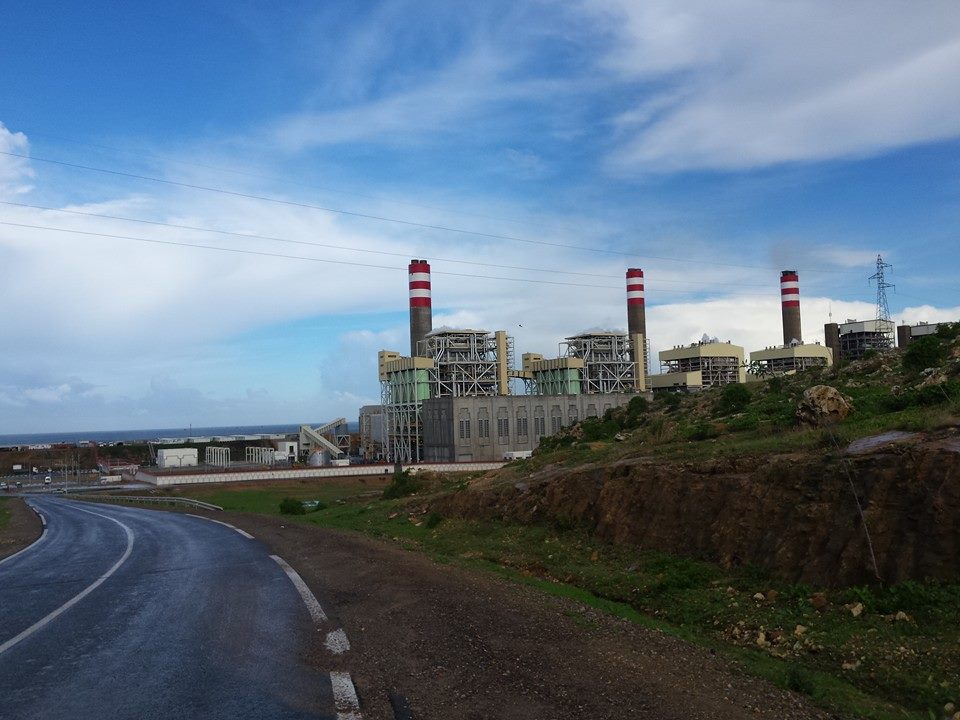
Jorf Lasfar (Arabic for "Yellow Cliffs") is a deepwater commercial port on the Atlantic coast of Morocco, 100 kilometers south of Casablanca, and home to one of the country's most important industrial zones. By the early 1990s, Morocco faced a serious and growing energy challenge: rapid economic growth had pushed demand for electricity well beyond what the national grid could reliably supply. The state electricity utility, Office National de l'Électricité (ONE), experienced severe power shortfalls in 1993 and 1994. New generating capacity was urgently needed — but the government's fiscal constraints made traditional public financing of a large-scale power station impossible.

Morocco was the first country in North Africa to introduce Independent Power Producers (IPPs).*) In 1994 the government amended its electricity law specifically to permit private power generation for the first time, and launched an international competitive tender for a private operator to take over the two existing 330 MW coal-fired units at Jorf Lasfar and construct two additional units of the same specification.


*) See also: Daniel Müller-Jentsch, "The Development of Electricity Markets in the Euro-Mediterranean Area," World Bank, 2001, p. 50.

Project Description

The ABB/CMS consortium was awarded sole bidder status in February 1995, and a Protocol Agreement was signed with ONE in April 1996. The resulting structure was a 30-year Build-Transfer-Operate (BTO) concession. The project company, Jorf Lasfar Energy Company (JLEC), was established under Moroccan law as a joint venture between ABB Asea Brown Boveri Ltd of Switzerland and CMS Generation Co. of the United States, each holding a 50% stake. Under the arrangement, JLEC leased the two existing units from ONE, constructed units 3 and 4 on a fixed-price turnkey basis, and sold all power generated to ONE under a long-term Power Purchase Agreement. At the end of the 30-year term, operating rights revert to ONE. Financial closing was reached in September 1997.

At a total project cost of USD 1.508 billion, the Jorf Lasfar project was the largest independent power project in Africa and the Middle East at the time of its closing — and the single largest foreign investment ever made on Moroccan soil — with an eventual generating capacity of 1,320 MW, equivalent to approximately one third of Morocco's national power output.

Financial Advisory

Peter Hellmonds led ABB Germany's financing work on the Jorf Lasfar transaction from ABB Financial Consulting GmbH in Mannheim. His responsibilities spanned the full arc of project finance: structuring the German special purpose vehicle architecture, negotiating the terms of the Investitionsgarantie with the German federal government, coordinating across ABB entities in Switzerland, the United States, and Italy, and managing the interface with CMS Energy as the American co-sponsor. The German federal investment guarantee — covering ABB's full DM 300 million equity stake under the Germany-Morocco bilateral investment protection treaty — was a structurally critical element of the transaction, providing the sovereign risk protection that made ABB's equity commitment bankable. Financial closing was reached in September 1997.


Key Characteristics

Project Jorf Lasfar Power Station expansion and privatization
Location Jorf Lasfar, Atlantic coast of Morocco, 100 km south of Casablanca
Structure Build-Transfer-Operate (BTO) / 30-year concession
Sponsors ABB Asea Brown Boveri Ltd (Switzerland) 50% — CMS Generation Co. (USA) 50%
Project Company Jorf Lasfar Energy Company (JLEC), incorporated in Morocco
Capacity 4 × 330 MW coal-fired units (1,320 MW total); eventual one-third of Morocco's national power output
Total Project Cost USD 1.508 billion
Financial Closing September 1997
Offtaker Office National de l'Electricité (ONE), Morocco — under a 30-year Power Purchase Agreement
Recognition Largest independent power project in Africa and the Middle East at time of closing; largest single foreign investment in Morocco to that date

Financing Package

The total project cost of USD 1.508 billion was financed on a limited-recourse basis with a 25:60:15 ratio of equity, senior debt, and surplus operating cash flow. The debt package of approximately USD 894 million was arranged by ABN AMRO as lead bank and supported by a coalition of export credit agencies whose participation was each conditioned on World Bank involvement: the US Export-Import Bank (US EXIM), the Overseas Private Investment Corporation (OPIC), Italy's SACE, Switzerland's ERG, and Germany's Hermes. The World Bank provided a Partial Risk Guarantee of up to DM 313 million (approximately USD 184 million) against sovereign political risks — the guarantee that unlocked the entire commercial lending syndicate.

ABB's equity stake of DM 300 million was covered by a German federal Investitionsgarantie secured under the bilateral investment protection treaty between Germany and Morocco, protecting against expropriation, transfer restrictions, and political force majeure. CMS Energy provided the matching 50% equity on the American side. Debt borrowings were denominated in both US dollars and Deutsche Marks, reflecting the multi-jurisdictional nature of the sponsor and lender base.